Dental Implants in Istanbul, Turkey
Short answer
A dental implant is a titanium screw placed in the jawbone to hold a crown, bridge or denture in place of a missing tooth. Treatment is normally staged — assessment, a bone graft if one is needed, placement, then fitting the tooth — and the plan depends on the patient.
People from the UK travel to Istanbul for private implant treatment. Because the work happens in stages and may need follow-up after you fly home, the useful questions are practical ones: which implant system, how many visits, who provides aftercare and who deals with any problem. Clinicest is an independent information service, not a clinic: it cannot examine you or say whether implants suit you.
Reference range in Turkey: €450–900 (about £387–774) per implant, with abutment and crown. See the price breakdown and sources.
Written by Clinicest Editorial Team. Not yet reviewed by a dental professional. Last reviewed 21 September 2026. How we write and check this content. General information only — not medical advice.
How many visits Recovery and aftercare Questions to ask a clinic Dental implant costs
What are dental implants?
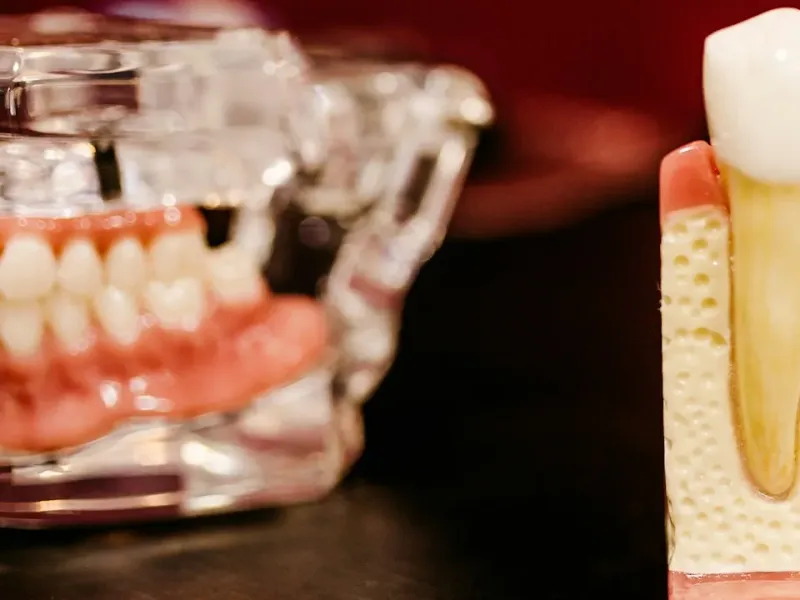
A dental implant is an artificial replacement for the root of a missing tooth: a screw, usually made of titanium, placed into the jawbone. It then supports a crown, a bridge or a denture (Leeds Dental Institute). One implant can replace a single tooth; several can support a bridge or a denture.
The NHS describes implants as a fixed alternative to removable dentures, and says they are usually only available privately and are expensive — provided on the NHS only rarely, for example after mouth cancer or an accident (NHS: dental treatments). That is why many people in the UK look at private treatment, at home or abroad.
Who may be suitable for dental implants?
Only a dentist who has examined you and looked at your scans can say whether implants are right for you; nothing on this page is personal advice. Guy’s and St Thomas’ NHS Foundation Trust describes implants as an option when a dentist does not want to put crowns on healthy teeth, or when dentures or bridges would be difficult or impossible because there are no suitable teeth or gums to support them. Some people do not have enough jawbone and need a bone graft first (bone grafting).
Leeds Dental Institute lists factors that reduce the chance of a successful implant: smoking, poor oral hygiene, a history of gum disease, previous radiotherapy to the jaw, poorly controlled diabetes and certain medicines such as bisphosphonates. Tell any clinic about all of these, and about your full medical history, before you travel — not on the day.
How dental implant treatment works
Guy’s and St Thomas’ NHS Foundation Trust says treatment usually involves three or four stages. The table sets out what may happen at each, with the questions that matter most to someone who is travelling for it.
| Stage | What may happen | Worth asking |
|---|---|---|
| 1. Assessment | Examination, X-rays or a scan, and a treatment plan. | Who will examine you and place the implants? Can you see the written plan — how many implants, and which system — before you commit? |
| 2. Bone graft, if needed | A graft rebuilds jawbone. A minor graft uses bone from elsewhere in the jaw under local anaesthetic; a major graft, typically from the hip, needs a general anaesthetic and a short hospital stay (GSTT). | Is a graft likely in your case? How long must it heal before the implant, and does that add a trip? |
| 3. Placement | Usually under local anaesthetic: the gum is opened, the implant is screwed into a prepared hole in the bone and the gum is stitched — about 30 minutes for a single implant, longer for several (Cambridge University Hospitals). Sedation or a general anaesthetic may be offered. | What anaesthesia is planned, and what will you be unable to do afterwards? Cambridge notes that after intravenous sedation or a general anaesthetic you should not drive, use machinery or sign legal documents for 48 hours. |
| 4. Healing | The implant has to join the jawbone before it can carry a tooth: 2 to 6 months in Leeds Dental Institute’s patient information. | Will you have a temporary tooth while it heals, and how do you look after it at home? |
| 5. Fitting the tooth | A connector (the abutment) and the crown, bridge or denture are fitted once the implant can bear it. | What material is the final tooth made of, is it in the price, and what does the warranty cover? |
How many visits may be needed, and how long does it take?
There is no single answer, and the two NHS trusts we read describe care for their own hospital patients, not for any clinic abroad. Guy’s and St Thomas’ NHS Foundation Trust says that in total treatment could take 6 to 12 months, with several visits at each stage. Leeds Dental Institute gives 2 to 6 months for the bone to join the implant before it can be used. If a graft is needed, Guy’s and St Thomas’ usually leaves it to heal for 3 to 6 months before implant treatment.
Patients who travel are often offered a pattern in two parts: a first trip for placement and a temporary tooth, then a second trip for the final tooth once the implant has healed. Some clinics propose a single, longer stay instead. Neither is automatically right or wrong for you, and whether a shorter schedule is appropriate is a clinical question the clinic should answer for your case. What you can do is ask for the schedule in writing — what is done when, what you wear in between, and the clinical reason for the timeline you are given — and plan flights and time away around it, including a second trip.
Dental implant recovery and aftercare
Your surgeon’s written instructions come first. For a sense of what aftercare typically involves, Guy’s and St Thomas’ NHS Foundation Trust tells its own patients to:
- take painkillers such as paracetamol or ibuprofen before the local anaesthetic wears off and for the first 48 hours;
- use an ice pack on the area for 10 minutes each hour for the first 6 hours to reduce swelling and bruising;
- eat normally, or on soft foods if the dentist advises it, and avoid alcohol for 24 hours;
- not brush the implant site for a week, using an antibacterial mouthwash twice a day instead;
- come back 7 to 14 days after treatment for the wound to be checked and stitches removed; and
- go to A&E if bleeding continues after 30 minutes of direct pressure.
Stitches differ: Cambridge University Hospitals says its stitches usually dissolve over several weeks. That is why the questions for an international patient are practical ones: which kind of stitches will you have, and who will check the wound if you fly home before that 7 to 14 days check? Get the aftercare instructions in writing, in English, with a contact for questions and a plan for what to do if something is wrong after you have travelled. Our guide to dental aftercare when you return to the UK covers what to bring home and when to seek help.
Risks and limitations
Good planning reduces the risks of implant treatment; it does not remove them. The NHS trust pages we read describe these:
- The implant may not bond with the bone. There is a small risk of this, and it is higher for some people, including people who smoke (GSTT). GSTT strongly recommends trying to stop smoking and staying a non-smoker.
- Problems later on. Inflammation of the gum and bone loss around an implant can occur and can eventually lead to the implant being lost; porcelain can chip and parts can loosen or wear and need repair or replacement (Leeds Dental Institute, GSTT).
- Nerve bruising. Placement in the lower jaw can bruise a nearby nerve, causing tingling or numbness in the lip, chin or tongue; Cambridge says this usually recovers after a few months and is rarely permanent. Infection and bleeding are described as uncommon (Cambridge University Hospitals).
- Grafts add their own risks. Pain, swelling, bruising and infection are possible after a bone graft, and there is a higher risk of failure when implants are placed in grafted bone rather than natural bone (GSTT).
- Long-term care. Implants need daily cleaning and regular dental check-ups (Leeds Dental Institute).
Implant systems also use their own parts, so a dentist at home may not be able to service a system they do not work with. Ask which system is placed and whether parts and instructions are available in the UK. Ask your own dentist and the clinic to explain every risk that applies to your case.
Dental implant costs
Implant prices depend on how many implants you need, whether a bone graft or extraction comes first, the implant system and the final tooth, and on the clinic. The short reference range is at the top of this page; it is not a quote, and only a written treatment plan is a price you can rely on.
The UK comparison, what moves the price, the unit each range covers, the sources and their dates, and what to have written into a quote are on the dental implant cost page. It is the pricing reference; this page does not repeat it.
How Clinicest is paid: it is free for patients and designed to be paid by partner clinics, so we have a commercial interest in patients going ahead. That is why we say where each figure comes from, and why you should compare more than one written treatment plan. Read our editorial policy.
Questions to ask an implant clinic
The General Dental Council advises speaking to your own dentist first, and asking who will carry out the treatment, what their qualifications are, which professional body regulates them, whether the work is guaranteed and for how long, who pays for extra flights, hotel and remedial work, and whether further treatment is included in the initial cost (GDC). For implants, add:
- The name of the dentist who will place the implants and their registration — in Turkey this is normally through the Turkish Dental Association. Ask to see it.
- The implant system and brand, and the size of each implant, in writing — with the warranty terms.
- Whether you are likely to need a bone graft, and how that changes the schedule and the price.
- Exactly what the quote includes: scans, extractions, grafting, anaesthesia, the temporary tooth, the final tooth and follow-up visits.
- The full schedule, in writing — how many trips, how long each lasts, and the clinical reason for it.
- Who checks the wound and removes stitches, and who you contact after you have flown home.
- Copies of your X-rays, scans and the exact implant details, in a form your own dentist can use.
More on comparing plans: twelve questions to ask a clinic before you agree to treatment. Read what the regulator advises about dental work in Turkey too. When you have a written plan to compare, you can send Clinicest a request.
Travelling to Istanbul for dental implants
Implant treatment is staged, so travelling for it means planning around a schedule, not a single appointment. Ask how many days you need in Istanbul for each stage, what happens if healing is slower than planned or a check finds a problem, and who pays for an extra night or a changed flight (the GDC’s advice above covers this). Keep flights and accommodation flexible until the written plan is agreed.
Flying after implant surgery
There is no general rule we can source: the NHS aftercare guidance we read does not mention flying. It depends on the procedure — a bone graft or sedation changes things — and on how you are healing. Ask your surgeon, in writing, when it is safe for you to fly and whether you need a check before you travel, and get the answer before you book the return flight.
Planning treatment from the UK
- Talk to your own dentist before you go, as the GDC advises: they know your history and will need to know your plans.
- Get a written treatment plan with the stages, the return visits and the price, and do not feel you must commit on the day.
- Find out who handles complications, and how, before you have treatment — and get that in writing.
- Ask for your records and the implant details to take home, and an aftercare plan you understand before you fly.
- Whether a UK dentist takes on any follow-up is their decision, and implants are usually private in the UK (NHS); ask your dentist before you travel, rather than assuming.
Entry requirements and a pre-booking checklist for travellers from Britain are in our UK patient planning guide.
Full-mouth implants and All-on-4
“Full-mouth” implant treatment usually means replacing all the teeth in one or both jaws. It can be done with an implant for each tooth, or with fewer implants supporting a fixed bridge. All-on-4 is one full-arch approach: four implants support a fixed bridge. It is related to, but not the same as, the single-implant treatment described here, and it is priced differently — per arch rather than per implant — so its costs are on their own page. Whether a full-arch approach, individual implants or something else suits you is a decision for a dentist who has examined you.
Alternatives to dental implants
- A dental bridge, which uses the neighbouring teeth as anchors.
- A partial or full removable denture; the NHS describes implants as a fixed alternative to these.
- Leaving the gap, which is a legitimate choice for some people.
Clinics offering this treatment
Partner clinics are being onboarded.
No clinics are listed on Clinicest yet, so there is nothing to compare today. You can still send a request — we will only match you with a clinic once one that suits your case has passed our verification standard.
Frequently asked questions
How much does a dental implant cost in Turkey?
Clinicest’s reference range in Turkey is €450–900 per implant, with abutment and crown (about £387–774). Published UK private price guides quote £1,800–4,500 per implant, with abutment and crown. These are indicative ranges, not quotes: the price you can rely on is the one in a clinic’s written treatment plan after it has examined you.
Is it safe to get dental implants abroad?
It depends on the clinic, the dentist and your own health, as it does anywhere. The UK General Dental Council advises speaking to your own dentist first, asking who will carry out the treatment and how they are regulated, and getting the warranty, aftercare and the cost of any remedial work in writing. It also notes that it cannot guarantee that standards abroad are the same as in the UK.
How many trips to Istanbul may dental implants need?
It varies by clinic and case. A pattern often quoted to international patients is one trip for placement and a temporary tooth, then a second for the final tooth once the implant has healed; some clinics propose a single, longer stay. Ask for the schedule in writing, with the clinical reason for it. A bone graft usually adds a healing period first — Guy’s and St Thomas’ NHS Foundation Trust leaves grafts to heal for 3 to 6 months in most cases before implant treatment.
How long does dental implant treatment take?
Guy’s and St Thomas’ NHS Foundation Trust says treatment at its hospital could take 6 to 12 months in total, and Leeds Dental Institute says the bone needs 2 to 6 months to bond with the implant before it can be used. Clinics abroad may quote shorter schedules — for example by fitting a temporary tooth on the day of surgery — so ask for the clinical reason and when the final tooth would be fitted.
What is osseointegration?
It is what dentists call the implant bonding with the jawbone, so that it can hold a tooth. The NHS pages we read describe the implant "joining" the bone, and Leeds Dental Institute gives 2 to 6 months for bone integration before the implant can be used. If an implant does not bond properly it can fail early; the risk is higher for some people, including people who smoke.
Can dental implants and crowns be fitted in one visit?
Sometimes a temporary tooth is fitted on the day of surgery, but the final crown, bridge or denture is normally made once healing allows, which is why implant work is usually staged. A clinic that proposes a single-visit plan for the whole treatment should explain in writing why that suits your case and what follow-up it expects.
When can I fly after implant surgery?
There is no single rule we can source: the NHS aftercare guidance we read does not address flying. It depends on the procedure — for example a bone graft or sedation — and on how you are healing. Ask your surgeon, in writing, when it is safe for you to fly and whether a review is needed before you travel. Cambridge University Hospitals notes that after intravenous sedation or a general anaesthetic you should not drive, use machinery or sign legal documents for 48 hours.
What if I need aftercare after returning to the UK?
Ask before you book: who pays for corrective work, including flights and hotel; how long the work is guaranteed; and whether further treatment is included in the initial cost. Guy’s and St Thomas’ asks its patients to come back 7 to 14 days after treatment to have the wound checked, so ask who would do that check if you fly home before then. Take your records and the exact implant details home, and tell your own dentist your plans before you travel.
Sources
- Dental treatments — NHS (nhs.uk) — page reviewed 8 July 2026. NHS patient information. Accessed 21 September 2026
- Dental implants — Overview — Guy’s and St Thomas’ NHS Foundation Trust — patient information, reviewed December 2024. NHS patient information. Accessed 21 September 2026
- Dental implants — After having a dental implant — Guy’s and St Thomas’ NHS Foundation Trust — patient information, reviewed December 2024. NHS patient information. Accessed 21 September 2026
- Bone grafting for dental implants — Overview — Guy’s and St Thomas’ NHS Foundation Trust — patient information, reviewed December 2024. NHS patient information. Accessed 21 September 2026
- Dental implants — Leeds Dental Institute, Leeds Teaching Hospitals NHS Trust — patient information, reviewed June 2025. NHS patient information. Accessed 21 September 2026
- Insertion of dental implants — Cambridge University Hospitals NHS Foundation Trust — patient information, approved July 2025. NHS patient information. Accessed 21 September 2026
- Going abroad for dental treatment — General Dental Council (GDC). Regulator. Accessed 18 September 2026
- Türk Dişhekimleri Birliği (Turkish Dental Association) — Turkish Dental Association. Professional body. Accessed 18 September 2026
- Dental implant costs in the UK — Zental (UK private dental group) — price guide, updated 26 Aug 2026. Commercial price guide. Accessed 18 September 2026
- How much do dental implants cost in the UK? — Specialist Dental Services — price guide, August 2026. Commercial price guide. Accessed 18 September 2026
- Dental implants cost UK — Wigmore Smiles & Aesthetics — price guide, updated 23 Sep 2025. Commercial price guide. Accessed 18 September 2026
UK price guides are published by private dental providers, so they are commercial pages; we show more than one where they exist and say when only one is available.
Sources and figures last checked 21 September 2026.